
Rumcajs
Moderators
-
Joined
-
Last visited
Everything posted by Rumcajs
-
Rumcajs replied to Shorty1989's topic in Nissan Patrol GQ/Y60 & Ford Maverick (GQ Patrol, 1988–1997)Looking at the specs it seems the lowest ratio is 3.9, standard was 4.1. There should be a code on the VIN plate like axle type H233B 41 (41 means 4.1 ratio) thats how it is on GU I'm not that sure about GQ. Cheers
-
I'll give you my tip, walk away now that thing has done too many kays and being in the bog stock I'd be reluctant. You need one with low kays. Here is the thing why would anyone buy Patrol and not ever go offroad with it. They don't buy it to do shopping centre runs for sure. Possibly because they need to tow a horse float or other trailer. Again big red flag for 3.0 L ZD30 towing in stock form with those kays is a grenade with safety pin already removed. Here is a thing about Patrols. If you are mechanically illiterate expect to be financially raped every time you visit a workshop. Patrols of that vintage have far too many niggling problems which need to be attended ASAP. So if you aren't handy with spanners than I hope you've got a big fat valet because you'll need it. I bought 05 Patrol with 65,000 kays on the clock for 35 G 3 years ago. Since than I'm constantly modding the bloody thing in the hope that it will last. Not exactly how I imagined my 4WDing. Owning a 4WD can be a miserable experience when you haven't got enough cash to keep it going. Ask yourself: Am I going to fit Catch can, boost gauge, EGT gauge, block EGR, fit Dawes and needle valves, glow plug timers, A/C filters, bigger exhaust, deal with pimply dash, vibrating front end, sagging springs, broken/cracking rear springs mounts, woeful load capacity, expensive maintenance, leaking intercoolers, worn out belt tensioners, oil switches replacement, terrible brakes, steering pulling to the left constantly...... Where do I stop? Cheers
-
Rumcajs replied to Shorty1989's topic in Nissan Patrol GQ/Y60 & Ford Maverick (GQ Patrol, 1988–1997)Speed related vibration is usually a wheel balance problem first. Cheers
-
Not sure what exactly you saying in regards to the IP, if it doesn't have compensator its gonna smoke every time the before turbo spools up. Was this NA converted to turbo? Cheers
-
Injector can get wrecked easily by dirty fuel, having said that if it has done in excess of 100 K in years it could easily be that. Another thing black smoke under load is always over-fueling issue. If it has aftermarket turbo this could be a problem as who knows how the mapping of the turbo syncs with the mapping of injection pump. I'd check if the smoke compensator has not been wound up. Its common apparently. Also I'd checked just in case the diaphragm is broken or and boost pipe to it (compensator) has a leak/crack. It could easily be just that. Cheer
-
I'd keep the boost slightly lower around 12-14 psi for longevity and EGT 500° C max. Conservative values could be even lower as the goal is not max power. Cheers
-
Where does one start? The general idea about inter-cooling is lower temp of incoming air from the compressor side to gain extra air/oxygen in to the combustion due to increase in the density of the colder air. This also has an effect on power output but more importantly on the fuel consumption and that's where inter-cooling counts. There are several factors when considering inter-cooling and those are; 1.Pressure drop and restriction across the cooler and piping 2. Thermal efficiency of the cooler being able to cool the air efficiently. So with those in mind you'll need to polish your knowledge on thermodynamics and airflow physics. Choosing the right inter-cooling depends on several factor but alternative methods are; Water to air being easier but less effective (engine coolant temperature is a limiting factor consider 80°-90°C. More high end unit would employ different cooling fluid than engine coolant. Air to air being reasonably effective consider best/better designed units can lower the temperature to about 10° - 15° C above the ambient temperature. Than you'll need to consider the TMIC (Top Mounted Intercooler) and FMIC (Front Mounted Inter-cooler) where of course there are trade offs between each type. I'd of course go for FMIC being the most effective however it is the most difficult to get right even if you buy of the shelve unit and hopes are whoever designed it has done the home work right. There are several commercial alternatives available for TD42 but knowing your attitudes you'll probably try something yourself. Here is a link to get you started --> Intercooling Cheers
-
Here --> http://www.youtube.com/watch?v=HuKva8GUwBk?version=3 Cheers
-
That's gona look apart once it is finished, kinda like "pick up truck". Cheers
-
You'll need an OBDII adapter and software (e.g. Torque for Android and BT adapter) or OBDII box like Scangauge. I'm surprised you haven't got one yet (Scangauge) its the most useful kit/mod you can have. What is written in ZD30 reference document is relating to Di non CRD models with Nissan Consult II which is not OBDII compliant. Cheers
-
Rumcajs replied to Shorty1989's topic in Nissan Patrol GQ/Y60 & Ford Maverick (GQ Patrol, 1988–1997)There is/are spacer/s and shim/s to get the pinion bearings pre-load right. There are several sizes available. Cheers
-
Hi Mick, welcome to the forum. Cheers
-
"Rescued a Toyota" Aargh, the shame Toyo saved by Patrol again......
-
Thats just e- F- in hillarous....I'm still trying to catch my breath......... Thanks for posting......
-
Rumcajs replied to Shorty1989's topic in Nissan Patrol GQ/Y60 & Ford Maverick (GQ Patrol, 1988–1997)Thats pretty simply; count number of teeth on pinion and crown wheel than ratio=driven/driver or ratio=number of teeth on crown wheel divided by number of teeth on the pinion. Cheers
-
I wouldn't worry about the "black canister filter thingie" that is just a vacuum reservoir if you have one that is fine but you can do without one. Yo can run the "resonator line" from anywhere on the turbo suction line side after the air cleaner Also you do need to "intercool" the setup for sure and indeed that is going to be a bit of gamble to get right but when you do you'll get the power and the economy and this where VGT will come in to its own with quick spool up at low revs. Don't forget to take out/disable EGR as well. This should be interesting setup. Feel free to start your own mod thread. Cheers
-
OK, your was "normal" wasted turbo than you'll be missing the whole vacuum control for the VGT turbo charger. Air filter resonator/damper is basically reservoir like plastic box connected in to intake pipe after air cleaner leading in to suction side of the turbo charger to dampen surge noise when turbo kicks in or that's what I believe is there for so not strictly performance more for removing a resonating pulses of the turbo compressor. Remember VGT unit will spool up much faster. I can't see why it wouldn't work even without the resonator, indeed you probably going to find a better spool up with VGT unit meaning more low down torque if anything. Downside could be the cost/maintenance and in your case a careful adjustments of the spool up rate and max boost so you will need to use Dawes valve as well. I'm just curious as how the peak boost is handled with original ECU. Did you have a boost gauge installed in your old setup? If not than you might have to start fairly conservative. Also that means that your original setup didn't use MAF unit to control AFR which means even more reliance on the boost. This could create some interesting results with ECU smoke maps. I'd make sure you have EGT gauge installed. I'd give it a try, the needle valve and Dawes valve are cheaper to get than another turbo. Cheers
-
Hi there, Welcome to the forum and sadly nope the ZD30 in series III is not more reliable. The same fundamental issues still exist until common rail models, so if you can afford it go for later post 2007 CrD models if you insist on ZD30 option. Cheers
-
Awesome looking rig. Credit to you mate. Cheers
-
Back at the end of August 2012 I did a trip to Eastern corner of the Flinders Ranges for what was invitation only trip for people from 4x4 Earth and P4x4 forums thanks to Patrol guru Chaz (15 cars only, first come first served actually) Its Bunkers Conservation Reserve dedicated to Yellow Footed Rock Wallaby preservation. What a place. Bonus of the trip was climb to Mt. Caernarvon (a part of old Skytrek route) which is now off the limits to visitors to Willow Spring station thanks to owners of said establishment unwillingness to cooperate with YFRWPA (Yellow Footed Rock Wallaby Preservation Association Inc) So much for "New Skytrek" Weather was fantastic but cloudy on the Mt Caernarvon climb nonetheless I thoroughly enjoyed the place and company of people involved. Everyone will be pleased to know that Patrols also ruled. Anyway here are some photoshots from the place......
-
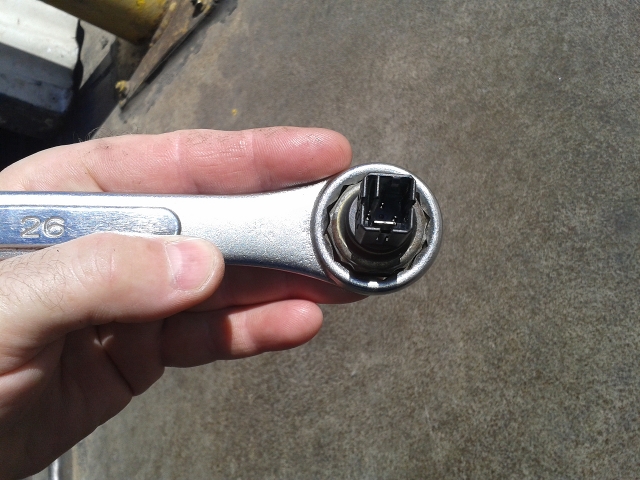
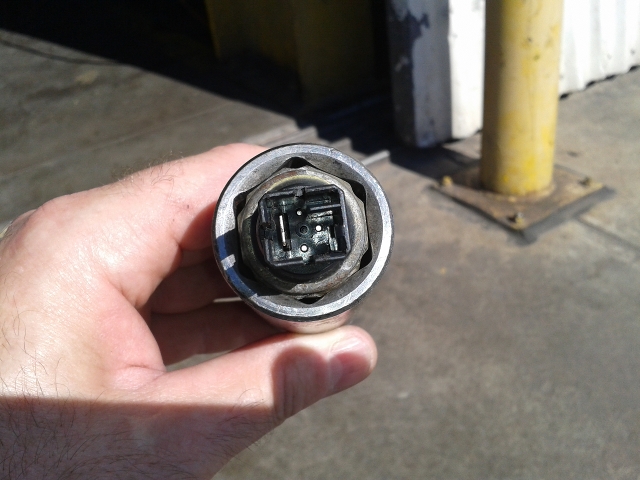
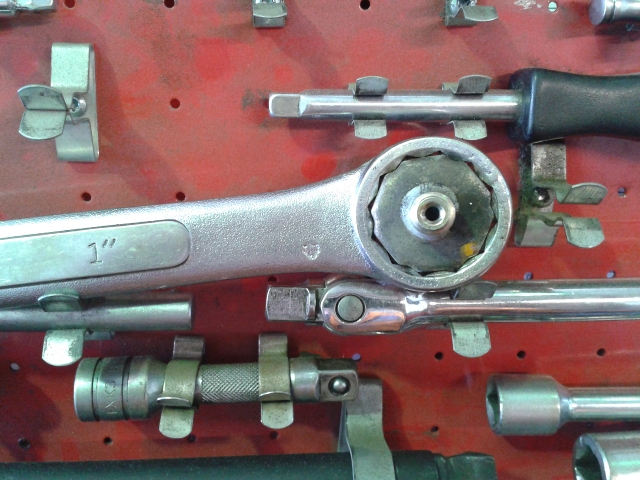
Hi guys, Just thought this info maybe useful to those attempting to replace the oil sender/s on ZD30. I had a bit of mission today to find out exactly what fits, I found that with certain conditions following will apply: The shape of the sensor makes it fun to choose the socket/spanner size for sure" The sender is 27 mm across the flats The actual socket/spanner which fits exactly is 1" but it must be 12 points socket/spanner. ---------------------------------------------------------------------------------------- 26 mm 12 point (double hex) spanner and/or socket will also fit but it will be a loose fit good enough to undo. ------------------------------------------------------------------------------------------- 27 mm or 1 1/16 open ended spanner will fit the sensor but not in the location and ring spanner (12 point/double hex same as socket included) will be too big 27 mm or 1 1/16 deep socket will loose fit and good enough to undo but it must be 6 point(single hex) aka impact style. Note on the spanners, it is actually quite hard to get the spanner on the sender/s as their location and surrounding items will make it next to impossible to use. LHS (if fitted) sender is obstructed by its own heat shield and RHS sender is mounted above/next to starter motor with no space for spanner. Use of the deep socket is preferred just don't forget the caveats with sizes and types. Deeps socket 12 point 1" (actual size), 26 mm .... OK Deep socket 6 point impact style 27 mm, 1 1/16 .....OK Cheers
-
As soon as I read the post I thought of the fast idle switch. Cheers
-
Mate, you oughta buy that guy a beer or two. Its great to beat the stealers. Cheers
-
I'd caution with second hand seatbelt as you wouldn't know where it has been make sure you give it a good visual. As for tips what to do, I'm not sure, never had these kind of seatbelts apart before. I'm pretty sure Mr Nissan is going to slug you with a pretty penny. Cheers
-
Light should go out I think once the key has been approved......I believe NATS can't be by-passed you need a new unit )reader/transponder than it needs to be reprogrammed by Nissan stealer. "INTRODUCTION The Nissan Anti Theft System (NATS) was introduced initially around 1995 with a basic immobiliser, which did not use key transponders. This system was known as NATS 1. Subsequently NATS 2 was introduced which uses the transponder technology. Further iterations of the NATS system have been introduced, up to NATS 6.5. The earlier systems use a security timed access, similar to Ford systems, which require a period of time before the keys can be programmed. NATS 5 uses a pin code, as with GM and VAG systems. This system was fitted on vehicles from 2001 MY onwards. A further development is the introduction of a CAN system that was first introduced on the Micra in 2003. The Micra system comes in two forms either the Intelligent System or Non-Intelligent system. NATS IGNITION KEY This uses standard transponder technology, and have both RED and BLUE chips to identify non crypto and crypto type transponders. The BLUE chip types are fitted on the latest NATS 5 system. When programming keys, on NATS systems up to NATS 4, all keys stored in memory will be deleted, however on NATS 5 additional keys can be added. Up to 5 keys can be programmed into NATS 5 systems, and 4 keys into NATS 2,3 & 4 systems. NATS IMMOBILISER UNIT The NATS immobiliser unit, is normally mounted next to the ignition switch or behind the fascia area. The unit is sometimes also fitted with a dongle unit, and is fitted on right hand drive European vehicles for extra security. The NATS immobiliser controls signals to the Engine Control Module (ECM) which inhibit starting. On later systems there is also an input from the Audio system, which if disconnected inhibits the starting of the vehicle. On CAN systems the immobiliser function is part of the Body Control Module (BCM), which controls signals to the Engine Control Module (ECM) which inhibit starting. NATS SECURITY INDICATOR The security LED is normally mounted in the dashboard area and indicates the status of the system. When a problem is detected, the LED will indicate the fault as listed in the following table when the IGN is ON or in accessory position. CONDITION WITH DONGLE ENGINE CHECK LIGHT NATS LED NATS FAULT (NO DONGLE FAULT) ENGINE CHECK LIGHT 6FLASHES& ON AFTER IGN IS SWITCHED ON ATS FAULT (DONGLE FAULT) WITHOUT DONGLE NATS LED REMAINS ON FOR 15 MINUTES AFTER IGN IS SWITCHED ON NATS FAULT AND ENGINE COMPONENT FAULT LED ON ENGINE FAULT 6FLASHES & ON AFTER IGN IS SWITCHED ON LED ON AFTER NATS PROGRAMMING LED ON LED ON LED ON LED ON 6 FLASHES Cheers